Workouts · 8 min read
Best Inner Chest Exercises: 5 Moves for a Fuller Chest
The best inner chest exercises for a fuller chest line: cable crossovers, squeeze presses and more, with sets, reps and an honest look at what works.
Published November 5, 2026
The best inner chest exercises all do one thing: they bring your hands together and keep the pecs working hard while they do it. There's no separate inner chest muscle to isolate, but that deep line down the middle of your chest is still something you can build.
Most people chase that line with light dumbbell flies and a hard squeeze at the top, which is the exact spot where a dumbbell fly has almost no tension left. What actually fills in the middle is bigger pecs overall, moves that stay loaded as your arms cross, and low enough body fat for the shadow to show. Five moves over two sessions a week will cover it, and most lean beginners see a clearer line in photos within 10 to 12 weeks.
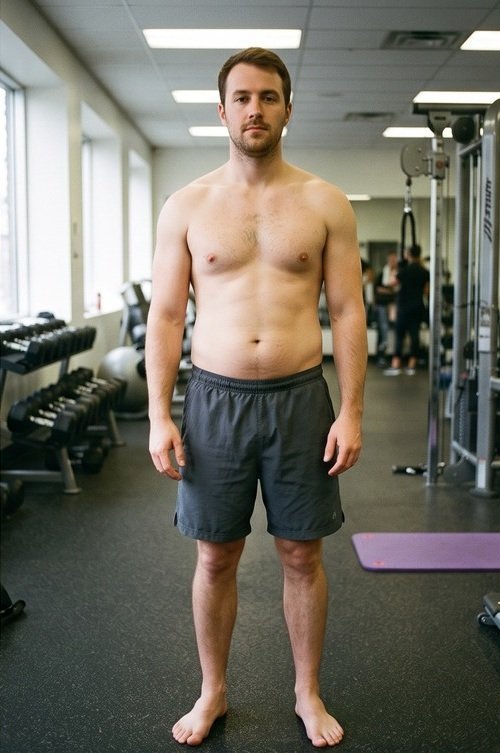 Before
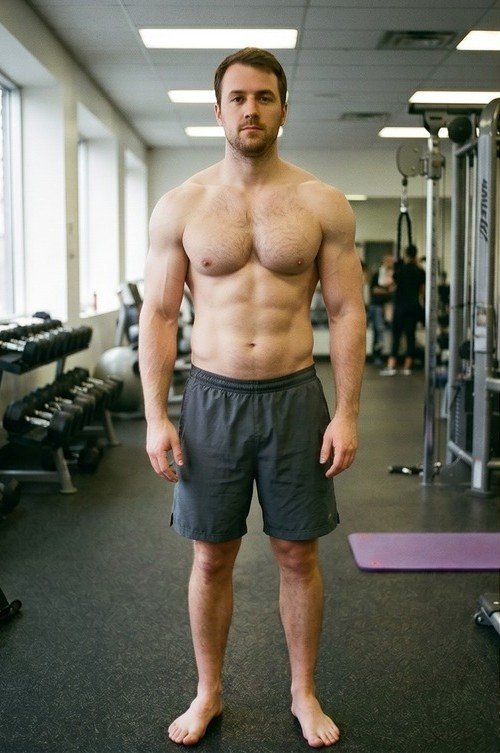 After
The work, step by step
- What the inner chest is, and what you can change. Your pec major runs from your breastbone and collarbone out to your upper arm bone. The "inner chest" is just the part closest to the breastbone. It isn't a separate muscle, so no exercise grows only that section. What you can do is train the job the whole muscle does: pulling your upper arm across your body. As your pecs get thicker, they stand further off your breastbone and the line between them gets deeper. Two honest limits. The gap between your pecs depends on where they attach to your breastbone, and that's genetic, so some people will always have a wider gap. And the line is a shadow, so it needs low body fat. For most men that starts to show around 12 to 15 percent. So here's the filter for any inner chest exercise: are the pecs still under real load when your hands are close together?
- Cable crossover: 3 sets of 12 to 15. This is the best inner chest exercise for most people, because the cable keeps pulling when your hands meet, right where dumbbells go slack. Set both pulleys around shoulder height or a little higher, take a handle in each hand and step forward into a split stance. With a soft bend in your elbows, sweep your hands down and in until they cross at the wrists, about level with your belly button. Hold that for a full second, then let your arms open slowly until you feel a stretch across the chest. Swap which hand finishes on top each set so both sides get the same range. Start light, around 5 to 10 kg per side. If your elbows are bending and straightening on each rep, you've turned it into a press, so drop the weight.
- Dumbbell squeeze press: 3 sets of 10 to 12. Also called a hex press, this one needs just a bench and two dumbbells. Lie flat, hold the dumbbells over your chest and press them hard against each other, palms facing in. Keep pushing them together the whole set while you lower them to your lower chest and press them back up. That inward push is the point. It keeps your pecs working as if they're trying to bring your arms across your body, which a normal press doesn't do at the top. You'll need less weight than on a regular dumbbell press, so 8 to 14 kg per hand is a good start for most beginners. Hexagon dumbbells stay together best, but round ones work if you stay slow. Lower for 2 seconds and don't let them roll apart.
- Pec deck: 3 sets of 12 to 15. The pec deck is the easiest way to feel your chest close up, and it's safe to take close to failure because there's nothing to balance or drop. Set the seat so the handles line up with the middle of your chest. Sit with your back flat on the pad and your shoulder blades pulled back and down, then bring the handles together in front of you and hold for a second. Open back up slowly and stop when you feel a good stretch, not when the weight stack makes you. Rolling your shoulders forward to finish the rep is the common cheat, and it moves the work out of your chest. Most beginners start around 20 to 35 kg, but numbers vary a lot between machines. Pick a weight that lets you pause every rep with control.
- Incline squeeze press and close-grip push-up. Incline squeeze press: 3 sets of 10 to 12. This is the same move as the flat version on a bench set to about 30 degrees, and it's the one to use if you want the upper inner chest, the part just under your collarbones that tends to look flat. Drop the weight by a kilo or two per hand. Close-grip push-up: 2 sets, stopping a couple of reps short of failure. Put your hands just inside shoulder width and keep your elbows close to your ribs. You don't need a tight diamond shape, since that turns it mostly into a tricep exercise and is rough on the wrists. It's a good finisher with no equipment. If your form breaks before 8 reps, put your hands on a bench. When 20 reps gets easy, add a 2-second pause at the bottom.
- Put your inner chest workout into your week. Day A: flat bench or dumbbell press 3x6-10, cable crossover 3x12-15, flat squeeze press 3x10-12. Day B: incline squeeze press 3x10-12, pec deck 3x12-15, close-grip push-up 2 sets. That's 17 chest sets a week and about 30 minutes per session, which is plenty for a beginner. Keep two or three days between them, for example Monday and Thursday. If you already follow a chest routine, swap instead of stacking: replace your dumbbell fly with the crossover and one press with the squeeze press, then see how it feels for two weeks. Keep the heavy press in, because it builds the overall size that deepens the line. Add reps until every set hits the top of its range, then add the smallest weight you can. Eat around 1.6 g of protein per kg of bodyweight, with a 200 to 300 calorie surplus if you're slim. If there's a soft layer over your chest, a 300 to 500 calorie deficit will sharpen the line faster than extra sets.
Common pitfalls
- Doing only squeezes and light flies. Isolation work adds to the line, but the overall size you get from heavy pressing is what does most of the job.
- Clanging the dumbbells together at the top of a regular fly. There's almost no load there, so it feels like work without doing much. Use a cable if you want tension in that position.
- Letting your shoulders roll forward at the end of each rep. If you feel it more in your shoulders than your chest, pull your shoulder blades back and lighten the weight.
- Judging your progress by the gap alone. Its width is mostly genetic, so a gap that stays the same doesn't mean your chest isn't growing. Check your tape measure, your lifts and your side-on photos too.
Pro tip: To show the line in a photo, stand under a light that comes from slightly above and in front, then press your palms together at chest height for a second and drop your hands. The flexed pecs stay full for a moment and the overhead light drops a shadow straight down the middle. Flat front light from a phone flash wipes that shadow out.
How Muscle Editor fits in
Curious how a deeper chest line would look on your own frame? Run a shirtless or fitted-tee photo through Muscle Editor's Chest editor at Fit, which is close to what a few months of steady training can add. Keep it next to your real monthly photos as a goal picture, not as proof of progress.
Frequently asked questions
What is the best inner chest exercise?
The cable crossover for most people. The cable keeps your pecs under load as your hands cross, which free weights can't do. Without cables, the dumbbell squeeze press is the best option.
Can you actually target the inner chest?
Only partly. The pec works as one muscle and you can't grow just the section next to your breastbone. Moves that load the chest with your hands close together can add a little focus there, but overall chest size and lower body fat do most of the work.
What are the best inner chest exercises with dumbbells?
The flat and incline squeeze press. Pressing the dumbbells together keeps your pecs working through the whole rep. A regular dumbbell fly is good for the stretch at the bottom, but it does very little at the top where the hands meet.
Can I do inner chest exercises at home?
Yes. Squeeze presses work on the floor with any pair of dumbbells, close-grip push-ups need nothing, and a resistance band anchored in a door at chest height, behind you, handles crossovers well.
Filed under Workouts. Tagged: chest, pecs, inner chest, workout, beginners.