Workouts · 7 min read
Chest Dumbbell Workout: Build Your Pecs With Two Dumbbells
A chest dumbbell workout for beginners: five exercises, sets, reps, starting weights and a 12-week plan to build fuller pecs with just dumbbells and a bench.
Published October 24, 2026
A chest dumbbell workout is not the second-best option for when every bench press station is taken. For most beginners it's the better one: a pair of dumbbells and an adjustable bench let your pecs stretch deeper, work each side on its own and go easier on your shoulders than a barbell does.
The usual beginner chest day is flat barbell bench until failure, then a few sloppy push-ups. The bar locks your hands in one spot, the stronger side quietly does more of the work, and the shoulders take a beating from all the half reps. Dumbbells fix most of that, but only if you pick the right weight, use the full range and cover the chest from more than one angle. Set it up like that and most beginners see a fuller chest in a fitted tee within 10 to 12 weeks.
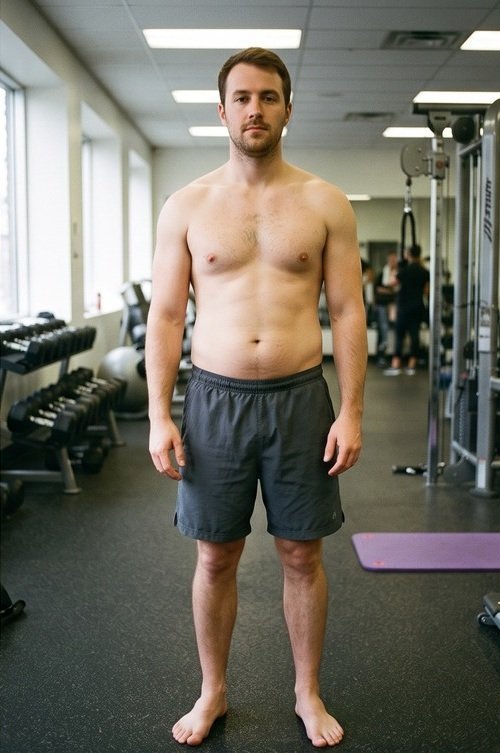 Before
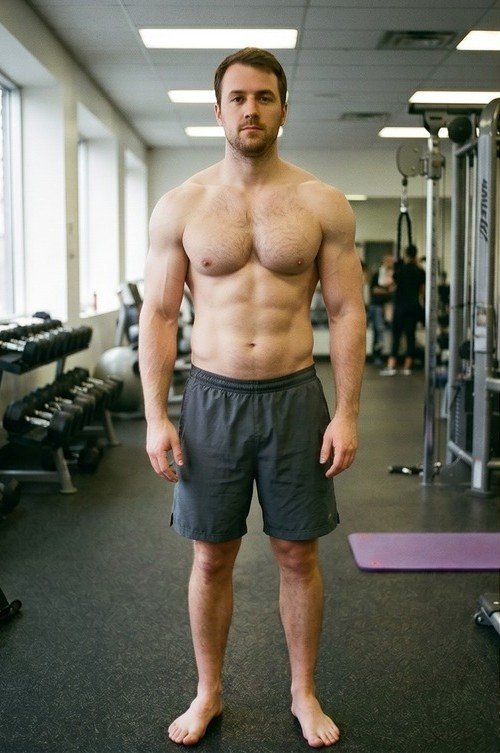 After
The work, step by step
- Why dumbbells build the chest so well. Your pecs do two jobs: they push your arms forward and they pull them across your body. A barbell only lets you do the first one, and the bar stops on your chest before the muscle is fully stretched. With dumbbells, your elbows can travel a few centimetres lower at the bottom and your hands can come slightly together at the top, so the chest works through a longer range on every rep. That stretch at the bottom is a big part of what makes muscle grow. You also find out fast if one side is weaker. If your left arm wobbles on rep 8 while the right one is fine, the barbell would have hidden that for months.
- Flat dumbbell press: 3 sets of 6 to 10. This is your main lift. Sit on the end of the bench with the dumbbells on your thighs, lie back and kick them up one at a time with your knees. Plant your feet, squeeze your shoulder blades slightly together and keep a small arch in your lower back. Lower the dumbbells until they're level with your chest and you feel a stretch, with your elbows at roughly 45 to 60 degrees from your body, then press up and slightly in. Don't clank them together at the top, because that takes the tension off. Most beginners start somewhere between 12 and 20 kg per hand. When you get 10 clean reps on all three sets, go up to the next dumbbell.
- Incline dumbbell press: 3 sets of 8 to 12. Set the bench to about 30 degrees, usually the second or third notch. This shifts more of the work to the upper chest, the strip under your collarbones that makes a chest look full in a shirt instead of droopy. Going steeper than 45 degrees mostly turns it into a shoulder press. Use the same form as the flat press, but let the dumbbells come down to the upper part of your chest. Expect to use about 2 to 4 kg less per hand than on the flat press. If you only have time for two exercises on a busy day, do this one and the flat press.
- Dumbbell fly: 3 sets of 10 to 15. This is the movement that covers the second job of the pecs, pulling the arms across the body. Lie on a flat bench with light dumbbells above your chest, palms facing each other and a soft bend in your elbows. Open your arms out to the sides in a wide arc until you feel a deep stretch across your chest, then bring them back up like you're hugging a big tree. Keep the elbow bend the same the whole way: if your elbows bend more as you lower, it turns into a press. Go light, 6 to 10 kg per hand for most beginners. Heavy flies are the fastest route to a sore shoulder, and the chest gets plenty from moderate weight and a slow stretch.
- Dumbbell pullover or squeeze press as a finisher. Pick one for 2 sets of 12 to 15. The pullover: lie across or along a bench, hold one dumbbell with both hands over your chest, and lower it back over your head with slightly bent arms until you feel a stretch through your chest and lats, then pull it back over. Start around 10 to 16 kg. The squeeze press: press two dumbbells pushed hard against each other in the middle of your chest, palms facing in, and keep squeezing them together the whole set. It feels light but your inner chest will be burning by rep 10. Both are good at the end of a session when your pressing strength is gone but the chest still has some work left in it.
- Run it twice a week for 12 weeks. Day A: flat dumbbell press 3x6-10, incline dumbbell press 3x8-12, dumbbell fly 2x10-15. Day B: incline dumbbell press 3x8-12, flat dumbbell press 2x8-12, dumbbell fly 3x12-15, pullover or squeeze press 2x12-15. Put two or three days between them, for example Monday and Thursday. That's 18 to 20 chest sets a week counting both days, which is on the higher end for a beginner, so if you're brand new, drop one set from each exercise for the first 4 weeks. Add reps until you hit the top of the range on every set, then move up one dumbbell. Eat around 1.6 g of protein per kg of bodyweight, and if you're slim, a 200 to 300 calorie surplus. The chest grows slowly on a big diet.
Common pitfalls
- Picking dumbbells you can't get into position. If you need a spotter to kick them up, they're too heavy for clean reps anyway.
- Cutting the range short at the bottom. Stopping halfway down skips the stretch, which is the main reason to use dumbbells in the first place.
- Flaring your elbows straight out to the sides at 90 degrees. It puts stress on the front of the shoulder and is the most common reason beginners get achy shoulders on chest day.
- Dropping the dumbbells straight to the floor at the end of a set. Bring them back to your thighs and sit up, or your shoulder takes the hit instead of the gym floor.
Pro tip: Take a chest photo every 4 weeks in the same spot, same window light, same fitted tee, phone at chest height. Chest growth shows up first as the shirt pulling tighter across the top and the pec line looking sharper from a slight angle, which is easy to miss in a mirror and obvious side by side.
How Muscle Editor fits in
If you want a target to train toward, run a front or slightly angled chest photo through Muscle Editor's Chest editor at Fit. That's roughly what 4 to 6 months of this plan can add, and seeing fuller pecs on your own body makes the boring pressing weeks easier to stick with. Use it as a goal picture, not a progress pic.
Frequently asked questions
Can you build a big chest with just dumbbells?
Yes. Flat and incline dumbbell presses plus flies cover everything the chest does, and dumbbells give a deeper stretch than a barbell. Most lifters never strictly need a barbell for chest size, though it's handy once you outgrow the heaviest dumbbells.
What weight dumbbells should a beginner use for chest?
Most beginners start around 12 to 20 kg per hand for presses and 6 to 10 kg per hand for flies. Pick a weight where the last two reps of each set are hard but your form still looks like the first rep.
How many times a week should I do a chest dumbbell workout?
Twice a week with two or three days between sessions. Each session hits the chest hard enough to grow, and the rest days are when it actually recovers and builds.
Can I do this chest workout at home without a bench?
Yes. Do floor presses lying on your back (the floor limits the range a bit, so add a 2-second pause at the bottom), floor flies with light dumbbells, and feet-elevated push-ups for the upper chest.
Filed under Workouts. Tagged: chest, pecs, dumbbells, workout, beginners.