Workouts · 8 min read
Lower Chest Exercises: 5 Best Moves for a Fuller Chest
The best lower chest exercises for beginners: dips, decline presses and cable flies, with sets, reps, starting weights and a simple twice-a-week plan.
Published October 31, 2026
Lower chest exercises are what give your pecs a clean, heavy line at the bottom instead of a chest that just fades into your stomach. The good news is that you don't need a special routine. Two or three moves that press or pull downward, done twice a week, cover it.
Most beginners either ignore the lower chest completely or overdo it without knowing. Flat bench and push-ups already hit the lower fibres a fair bit, so the real gap is usually the stretch and the squeeze at the bottom of the pec, not the amount of pressing. Add a downward angle and a fly that finishes low, and most people see a sharper line under the chest in photos within 10 to 12 weeks. The catch: if there's a soft layer of fat over the bottom of your chest, no exercise will draw that line on its own.
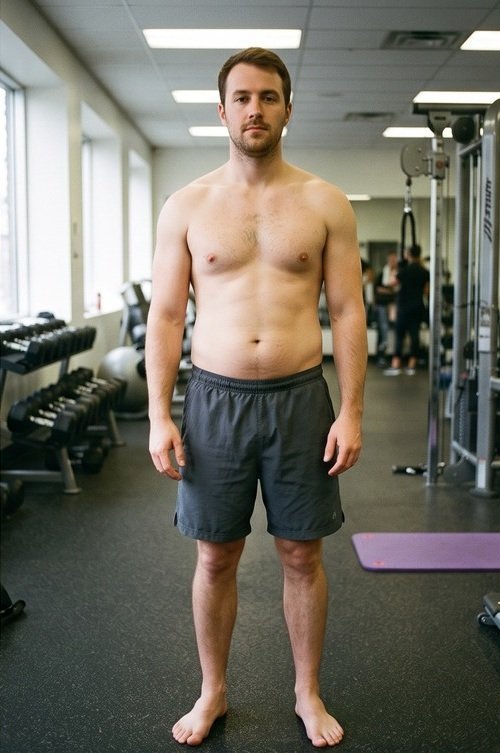 Before
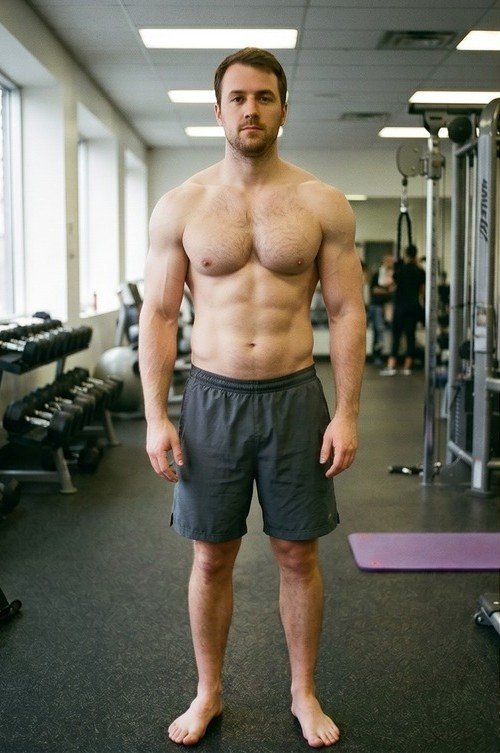 After
The work, step by step
- What the lower chest is, and how to aim at it. Your pec major has two main parts. The small upper part attaches to your collarbone. The big lower part, the sternal head, attaches along your breastbone and down to the top of your abs, and it makes up most of the chest's size. Its fibres run from low and in toward your upper arm, so it works hardest when your arms move down and across your body, like pushing yourself up out of a pool. That's the rule for picking lower chest exercises: press at a downward angle (dips, decline press) or bring your hands down and together (high-to-low cable fly). You can't isolate the bottom of the muscle completely, but you can shift a good part of the work there.
- Chest dip: 3 sets of 6 to 12. The best lower chest exercise for most people, and you only need parallel bars. Grab the bars, lift yourself to straight arms, then lean your torso forward about 20 to 30 degrees and let your elbows flare slightly out. Lower until your upper arms are roughly parallel to the floor and you feel a stretch across the chest, then press back up. Staying upright turns it into a tricep exercise, so keep that lean. Can't do 6 clean reps? Use the assisted dip machine (often 20 to 40 kg of help for beginners) or do slow negatives: jump to the top, lower over 4 seconds, 3 sets of 4. If the front of your shoulder pinches at the bottom, stop a few centimetres higher. Depth beyond parallel isn't worth a sore shoulder.
- Decline dumbbell press: 3 sets of 8 to 12. Set a bench to a slight decline, about 15 to 30 degrees, and hook your feet under the pad. Press the dumbbells up over your lower chest, then lower them with your elbows at about 45 degrees from your body until they're level with the sides of your chest. Dumbbells beat a barbell here because they let your hands come in a bit at the top and give a deeper stretch at the bottom. Most beginners start at 12 to 20 kg per hand. No decline bench? Put a sturdy 10 to 15 cm plate or step under the foot end of a flat bench, or do a flat press with a slight arch so the press drifts toward your lower chest. Ask someone to hand you the dumbbells the first few times, since getting into position upside down is awkward.
- High-to-low cable fly: 3 sets of 12 to 15. This is the one people feel straight away. Set both pulleys at the top, grab a handle in each hand and step forward into a split stance. Start with your arms out wide and slightly up, a soft bend in the elbows, then sweep your hands down and together until they meet in front of your hips. Squeeze for a second and let them rise back slowly. Think "hug a big barrel downward", and keep the elbow bend the same the whole way so it stays a fly and not a press. Start light, around 5 to 10 kg per side. Because the cable pulls from above, the lower chest has tension through the whole rep, including the squeeze at the bottom where dumbbell flies go slack.
- Decline push-up or decline machine press. Pick one as your last lower chest exercise of the session. Decline machine press: 3 sets of 10 to 15. Many gyms have a decline or "dip press" machine. Set the seat so the handles start at the bottom of your chest and press down and forward. It's easy to push close to failure safely, which is useful at the end of a workout. At home, do push-ups with your hands on a bench and feet on the floor, not the other way round. Hands up and feet down is the one that biases the lower chest. Feet up on a bench shifts the work to the upper chest, which is the opposite of what you want here. Aim for 3 sets of 12 to 20, and when that's easy, add a 2-second pause at the bottom.
- Run it twice a week for 12 weeks. Day A: chest dip 3x6-12, decline dumbbell press 3x8-12, high-to-low cable fly 3x12-15. Day B: keep your usual flat or incline press first, then high-to-low cable fly 3x12-15 and decline machine press or hands-elevated push-up 3x10-20. Put two or three days between them, for example Monday and Thursday. Combined with your other pressing, that's about 15 to 18 chest sets a week, plenty for a beginner. Don't drop upper chest work to make room: a chest that's only full at the bottom can look droopy, and the best look comes from training both. Add reps until you hit the top of every range, then add weight in the smallest step you can. Eat around 1.6 g of protein per kg of bodyweight, and if you're slim, a 200 to 300 calorie surplus. If you're carrying extra fat around the chest, a slow cut will sharpen the lower line faster than more sets.
Common pitfalls
- Doing dips bolt upright. That loads the triceps and leaves the chest with half the work. Lean forward and let the elbows flare a little.
- Going too steep on the decline bench. Past about 30 degrees the range gets short and blood rushes to your head, without any extra chest work.
- Turning cable flies into presses. If your elbows bend and straighten on every rep, lighten the weight and keep the arm angle fixed.
- Expecting exercises to fix soft tissue at the bottom of the chest. Building the muscle helps, but fat loss is what makes the lower line sharp.
Pro tip: Check your lower chest with overhead or slightly high side light, standing relaxed with your arms at your sides. The line under the pec is a shadow, so it shows much better with light from above than in a front-lit mirror selfie. Take the photo in the same spot every 4 weeks and compare.
How Muscle Editor fits in
For a clear target, run a shirtless or fitted-tee photo through Muscle Editor's Chest editor at Fit. That's close to what a few months of consistent chest training can add, including a deeper line under the pecs, and seeing it on your own body makes the boring dip progressions easier to stick with. Treat it as a goal picture, not proof of progress.
Frequently asked questions
What is the best lower chest exercise?
For most people it's the chest dip with a forward lean. It loads the lower pec through a big stretch with just your bodyweight. The high-to-low cable fly is a close second and easier to feel if you're new.
Can you target the lower chest?
Partly. The chest is one muscle, but pressing at a downward angle and flies that finish low shift more of the work to the lower fibres. You can't grow only the bottom of the pec, and you can't target fat over it.
How long does it take to build the lower chest?
Most beginners notice a clearer line under the chest after 8 to 12 weeks if they're reasonably lean. A big difference in photos usually takes 4 to 6 months of training twice a week with enough protein.
Can I do lower chest exercises at home?
Yes. Hands-elevated push-ups on a bench or table, dips between two sturdy chairs or on a dip station, and resistance band high-to-low flies anchored over a door cover the lower chest well.
Filed under Workouts. Tagged: chest, pecs, lower chest, workout, beginners.