Workouts · 7 min read
Forearm Workout: 5 Exercises for Bigger, Stronger Forearms
A forearm workout for beginners: five exercises with dumbbells and a bar, plus sets, reps, starting weights and a 12-week plan for thicker, stronger forearms.
Published October 28, 2026
A forearm workout takes about 10 minutes, twice a week, and it changes how your arms look in every short-sleeve photo. Your forearms are the part of your arm people see most, rolled sleeves, steering wheels, holding a coffee, and they're also the part most lifters never train directly.
Most beginners assume rows and curls will take care of the forearms. They help a little, mostly with grip, but they rarely add visible size. The forearm is a bundle of small muscles that flex the wrist, extend it, and turn the hand, and each of those needs its own movement through a full range. Skip them and you end up with decent biceps sitting on top of thin wrists, which makes the whole arm look smaller in photos. Train them directly for 10 to 12 weeks and most beginners notice watch straps and sleeve cuffs fitting tighter.
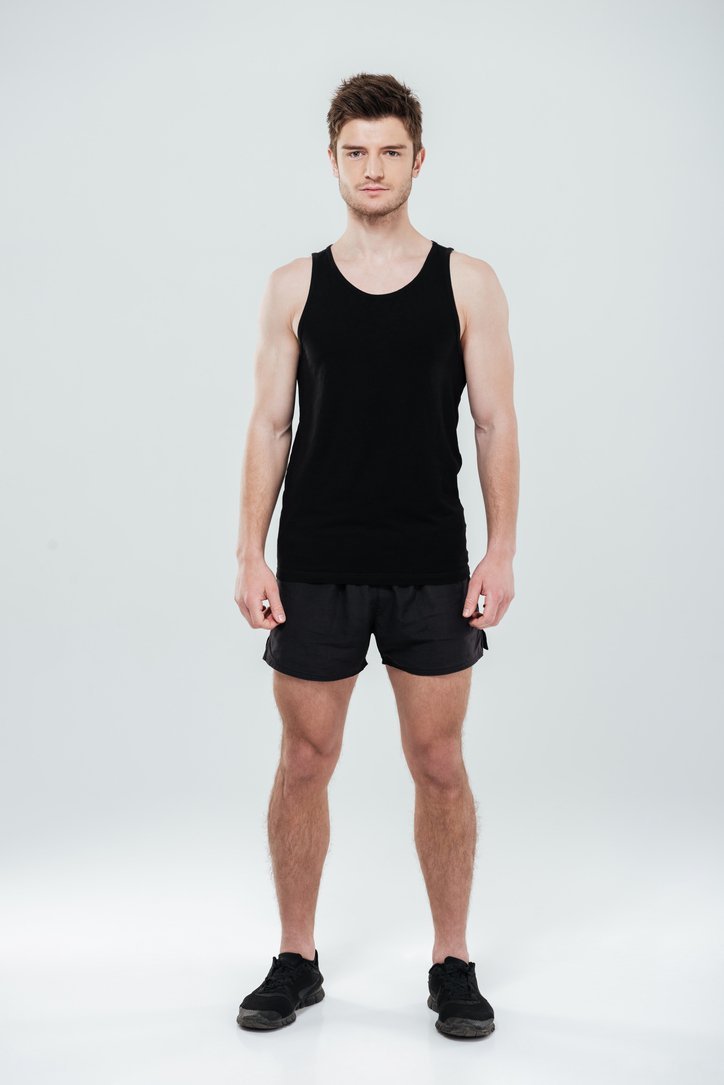 Before
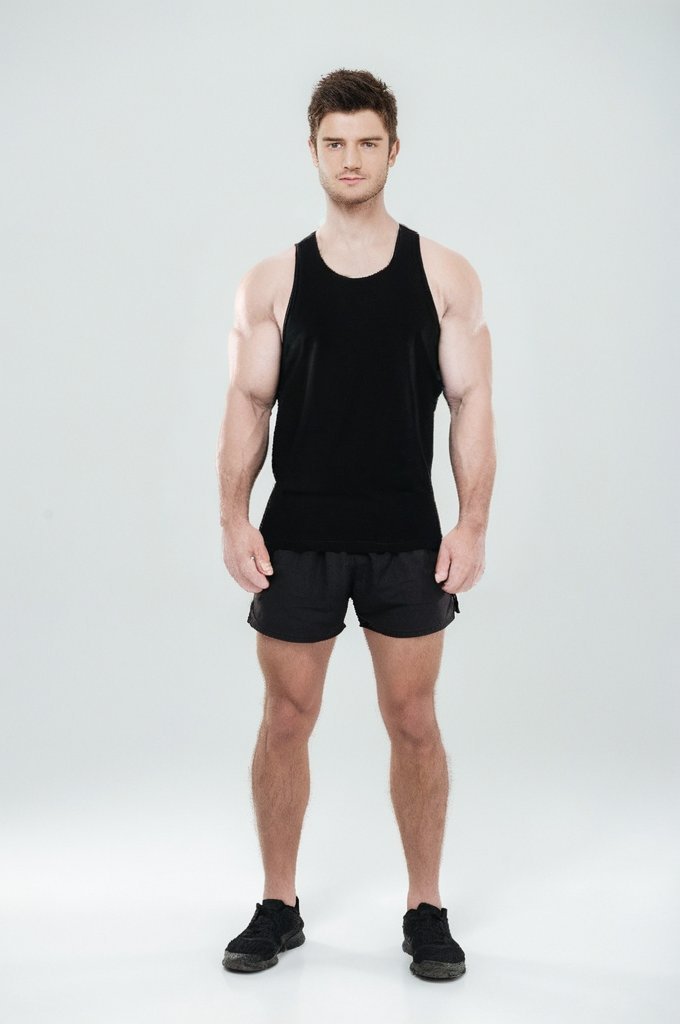 After
The work, step by step
- Know what you're training in a forearm workout. There are three jobs to cover. The flexors on the palm side curl your wrist up and close your hand, and they make up most of the forearm's size near the elbow. The extensors on the back of the forearm pull the wrist back and are usually weak in people who type all day. The brachioradialis runs along the top from the elbow toward the thumb, and it's the muscle that makes a forearm look thick from the side when your arm is hanging. A good forearm workout has one exercise for each job, plus some heavy holding for grip. That's why this plan has five short exercises instead of 10 sets of the same wrist curl.
- Wrist curl: 3 sets of 12 to 20. Sit on a bench with your forearms resting on your thighs or on the bench itself, palms facing up and your wrists just past the edge. Hold a dumbbell in each hand (or a barbell with both). Let the weight roll down to your fingertips, then close your hand and curl your wrist up as high as it goes. That finger roll at the bottom adds range most people skip, and range is where the growth is. Lower over 2 seconds. Most beginners start with 6 to 10 kg dumbbells, or 15 to 25 kg total on a barbell. Forearms take a lot of reps well, so the last 5 should burn hard.
- Reverse wrist curl: 3 sets of 12 to 15. Same setup, palms facing down. Lift the back of your hand toward the ceiling, pause for a second, and lower slowly. This trains the extensors, which almost never get any direct work and are often the reason people get sore elbows from heavy curls and pull-ups. You'll be much weaker here, so use about half your wrist curl weight: 3 to 5 kg per hand is a normal start. If the weight is jerking up, it's too heavy. Keep your forearm flat on the bench the whole time and let only the wrist move.
- Reverse curl or hammer curl: 3 sets of 8 to 12. This is the size builder for the top of the forearm. For a reverse curl, grab an EZ bar or two dumbbells with your palms facing down and curl them up with your elbows pinned to your sides. For a hammer curl, palms face each other. Both load the brachioradialis much more than a normal curl does. The reverse curl is the harder one, so use about 60 to 70% of your usual curl weight, around 10 to 20 kg on an EZ bar for most beginners. Lower over 2 seconds and don't let your wrists bend back on the way up. If you already do hammer curls on arm day, use the reverse curl here so you're not doubling up.
- Farmer's carry and dead hang for grip. Farmer's carry: 3 walks of 30 to 40 metres (or 30 to 45 seconds) with the heaviest dumbbells you can hold with a tall chest and steady steps. Start around 20 to 24 kg per hand. Squeezing a heavy load for that long works every muscle in the forearm at once, and it's the closest thing to a cheat code for thicker wrists. No space to walk? Stand still and hold them for time. Dead hang: 2 sets as long as you can, hanging from a pull-up bar with straight arms and a full grip. Aim to build from 20 or 30 seconds up to 60. Don't use straps on either of these. The whole point is that your grip gives out.
- Run it twice a week for 12 weeks. Day A: wrist curl 3x12-20, reverse wrist curl 3x12-15, farmer's carry 3 walks. Day B: reverse curl 3x8-12, wrist curl 2x15-20, reverse wrist curl 2x12-15, dead hang 2 sets. Tack them onto the end of a back or arm session, two or three days apart, for example Tuesday and Friday. Do them last, because tired forearms will cut your rows and pull-ups short if you train them first. That's around 16 to 18 sets a week, which forearms handle well since they recover fast. Add reps until you hit the top of the range on every set, then go up the smallest step you can, often just 1 or 2 kg. Forearm growth is slow and steady: expect around 0.5 to 1 cm around the thickest part in the first 3 months if you eat around 1.6 g of protein per kg of bodyweight.
Common pitfalls
- Bouncing fast half reps on wrist curls. Lower slowly and let the bar roll to your fingertips, or you're skipping most of the range.
- Training forearms before back or arms. Fried grip means fewer reps on the big lifts that build the rest of the arm.
- Going heavy on reverse wrist curls. The extensors are small and cranky, and too much weight shows up as elbow pain within a couple of weeks.
- Using straps on everything. Straps are fine for heavy Romanian deadlifts, but if you strap every pull, your grip never has a reason to get stronger.
Pro tip: Measure your forearm once every 4 weeks at the thickest point just below the elbow, arm relaxed and hand open, before you train. A pumped forearm can be almost a centimetre bigger, which will make your progress look faster than it is.
How Muscle Editor fits in
If you want to see what thicker forearms do for the whole arm, run a relaxed short-sleeve photo through Muscle Editor's Arms editor at Fit. That's close to what a few months of arm and forearm training can add, and the before/after slider makes it obvious how much the lower arm changes the look. Treat it as a goal picture, not a progress pic.
Frequently asked questions
How often should I do a forearm workout?
Two or three times a week works well. Forearms recover quickly because you use them every day, so short sessions of 6 to 9 sets at the end of a back or arm day are plenty for a beginner.
Can you make your forearms bigger?
Yes, though genetics play a big part. Some people have long forearm muscles that grow easily, others have more tendon. Almost everyone can add some visible size and a lot of grip strength with direct work and a full range of motion.
Can I do this forearm workout at home?
Yes. A pair of dumbbells covers wrist curls, reverse wrist curls, hammer or reverse curls and farmer's carries. Use a door frame pull-up bar for dead hangs, or squeeze a heavy towel-wrapped dumbbell handle for time if you don't have one.
Do I need to train forearms if I already do curls and rows?
For grip, maybe not. For size, usually yes. Rows and curls keep the wrist mostly still, so the flexors and extensors don't get a full range. Ten minutes of direct work twice a week makes a noticeable difference.
Filed under Workouts. Tagged: arms, forearms, grip, workout, beginners.