Workouts · 8 min read
Trap Exercises: 5 Best Moves for a Thicker Upper Back
The best trap exercises for upper, middle and lower traps: shrugs, carries, rows and Y-raises, with sets, reps, starting weights and a simple weekly plan.
Published November 1, 2026
Trap exercises are what make your upper body look solid from every angle. Built traps fill the slope between your neck and shoulders from the front and turn a flat upper back into something with real thickness from behind. You need about four moves and two short blocks a week.
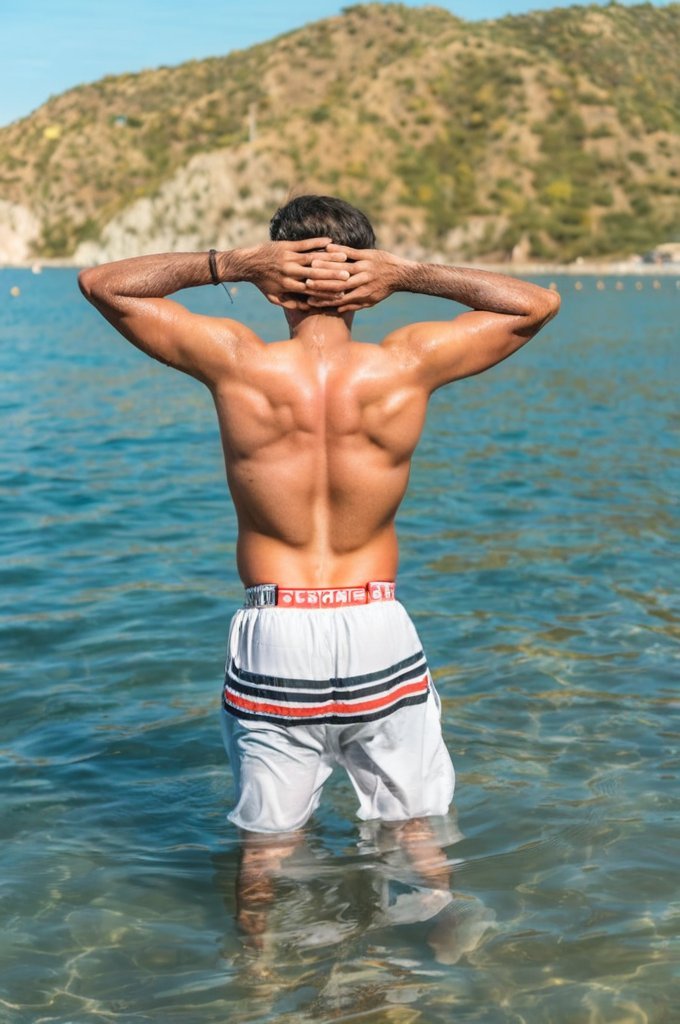
Most people think "traps" means shrugs, so they load up a barbell, bounce it a few centimetres and call it done. That only touches the top part of the muscle. The traps run from the base of your skull down to the middle of your back, and the middle and lower parts are what give the upper back its thickness in a back photo. They also keep your shoulders healthy when you press. Train all three regions with a few simple moves and most beginners see a fuller neckline and a thicker upper back within 10 to 12 weeks.
 Before
 After
The work, step by step
- Know the three parts of the traps before you pick exercises. The trapezius is a big diamond-shaped muscle with three regions that do different jobs. The upper traps run from your neck to the top of your shoulders and lift your shoulder blades up, which is a shrug. The middle traps sit between your shoulder blades and pull them together, which happens in rows. The lower traps run down toward the middle of your spine and pull your shoulder blades down and back, and they work hardest when your arms are overhead. That gives you a simple checklist for trap exercises: something that shrugs or holds heavy weight, something that squeezes the shoulder blades together, and something that pulls them down with your arms raised. Cover all three and you're done.
- Dumbbell shrug: 3 sets of 10 to 15. The best upper trap exercise, as long as you do full reps. Stand tall with a heavy dumbbell in each hand at your sides, arms straight. Lift your shoulders straight up toward your ears as high as they'll go, hold for a full second at the top, then lower them all the way down until you feel a stretch in the sides of your neck. No rolling the shoulders: it adds nothing and grinds the joint. Dumbbells beat a barbell for most beginners because your hands sit at your sides, so the path matches how the muscle pulls. A good start is 20 to 30 kg per hand. If you can't pause at the top, it's too heavy. When your grip gives out before your traps do, use lifting straps. That's exactly what they're for.
- Farmer's carry: 3 walks of 30 to 40 metres. Pick up the heaviest dumbbells or kettlebells you can hold with good posture and walk. Keep your chest up, shoulders pulled slightly back and down, and take short, quick steps. Your upper traps work the whole time to stop the weight pulling your shoulders toward the floor, and your grip, core and forearms come along for free. Start with roughly your bodyweight split across both hands, so an 80 kg person might carry 35 to 40 kg per hand, and drop it if your shoulders round forward. Rest 90 seconds between walks. Carries are a good fit at the end of a back or leg session, and they're one of the few trap exercises that also make day-to-day stuff like carrying shopping noticeably easier.
- Chest-supported wide row: 3 sets of 10 to 12. This is the middle trap exercise, and the one that adds thickness between your shoulder blades. Lie face down on an incline bench set to about 30 to 45 degrees, holding a dumbbell in each hand. Let your arms hang, then row with your elbows flared out to about 60 to 75 degrees from your body, so they finish level with your shoulders rather than tucked by your ribs. At the top, squeeze your shoulder blades together as if you're pinching a pencil between them and hold for a second. The bench stops you heaving with your lower back, so the work stays on the upper back. Most beginners start with 10 to 16 kg per hand. A seal row or a chest-supported row machine with the wide handles works the same way.
- Prone Y-raise and face pull for the lower traps. Prone Y-raise: 3 sets of 12 to 15. Lie face down on the same incline bench with very light dumbbells, 2 to 5 kg is plenty. Raise your arms up and out into a Y shape, thumbs pointing to the ceiling, until they're level with your head. Think about pulling your shoulder blades down into your back pockets before your arms move. It feels embarrassingly light, and that's normal: the lower traps are small and usually weak. Face pull: 3 sets of 12 to 20. Set a rope at upper chest height, pull it toward your forehead with your elbows high and finish with your hands beside your ears. It hits the middle and lower traps plus the rear delts, and it's a good warm-up before pressing. Use one at each session.
- Put your trap exercises into your week. Day A (on back or pull day): dumbbell shrug 3x10-15, chest-supported wide row 3x10-12, prone Y-raise 3x12-15. Day B (on leg or lower day): farmer's carry 3x30-40 m, face pull 3x12-20. That's around 15 sets a week and about 15 minutes per block. If you already deadlift or do heavy rows, your traps get extra work there, so don't add more shrug volume on top unless they're clearly lagging. Progress by reps first, then weight: once every set hits the top of the range with a clean pause, add 2 kg to the dumbbells or 5 metres to the carry. Eat around 1.6 g of protein per kg of bodyweight, and if you're slim, a 200 to 300 calorie surplus. Traps respond quickly in most people, so expect a visible change in photos sooner than for arms or chest.
Common pitfalls
- Bouncing heavy shrugs through a few centimetres. Half the range with twice the weight builds less than full reps with a pause at the top.
- Rolling your shoulders in circles during shrugs. It doesn't hit the traps any harder and it irritates the shoulder joint.
- Only training the upper traps. Big upper traps over a flat mid back make your shoulders look narrower and your posture worse, not better.
- Going heavy on Y-raises. If your lower back arches or your shoulders shrug up, the upper traps have taken over. Drop to the lightest dumbbells in the rack.
Pro tip: Take your upper back photo from behind with light coming from above, arms slightly raised or hands on your head. The ridges of the middle traps between your shoulder blades are shadows, so overhead light shows them far better than a flash or a front-lit mirror.
How Muscle Editor fits in
Want to see what thicker traps and a fuller upper back would look like on you? Run a back photo through Muscle Editor's Back editor at Fit, which is close to what a few months of steady trap and row work can add. Having that picture of your own frame makes the dull Y-raise sets easier to keep doing. Treat it as a goal picture, not proof of progress.
Frequently asked questions
What is the best trap exercise?
For the upper traps it's the dumbbell shrug done with a full range and a pause at the top. For the whole muscle, pair it with a chest-supported wide row for the middle traps and a prone Y-raise for the lower traps.
How often should I train my traps?
Twice a week is plenty for most people, at around 10 to 15 hard sets total. If you deadlift or row heavy, your traps already get a lot of work, so start at the lower end.
Can I do trap exercises at home?
Yes. Dumbbell or backpack shrugs, farmer's carries with heavy bags or water jugs, band face pulls and Y-raises lying face down on the floor or a bench cover all three parts of the traps.
Will big traps make my shoulders look smaller?
Only if they're the only thing you build. Oversized upper traps can make the slope from neck to shoulder look steep. Training side delts and the middle and lower traps alongside them keeps your frame looking wide.
Filed under Workouts. Tagged: traps, back, upper back, shoulders, workout, beginners.